As I sit here in the morning it feels so strange just to reflect on the books I’ve read this year already. It’s not the fact that I’m doing it, it’s a recurring pattern I observe nowadays more often: Thinking (on your own) is hard! I could just let some LLM summarize the whole books for you and write this blog post for you, right? But what’s the point? I mean, what would I gain from this? Training your intellect is still hard, doing deep work, ditto. But I guarantee you it’s for your own mental health.
That being said, this is a collection of book summaries for the books I read during January-September 2026 categorized
by topic/genre.
Philosophy #
📚 How to think like Socrates #
Donald J. Robertson — Goodreads
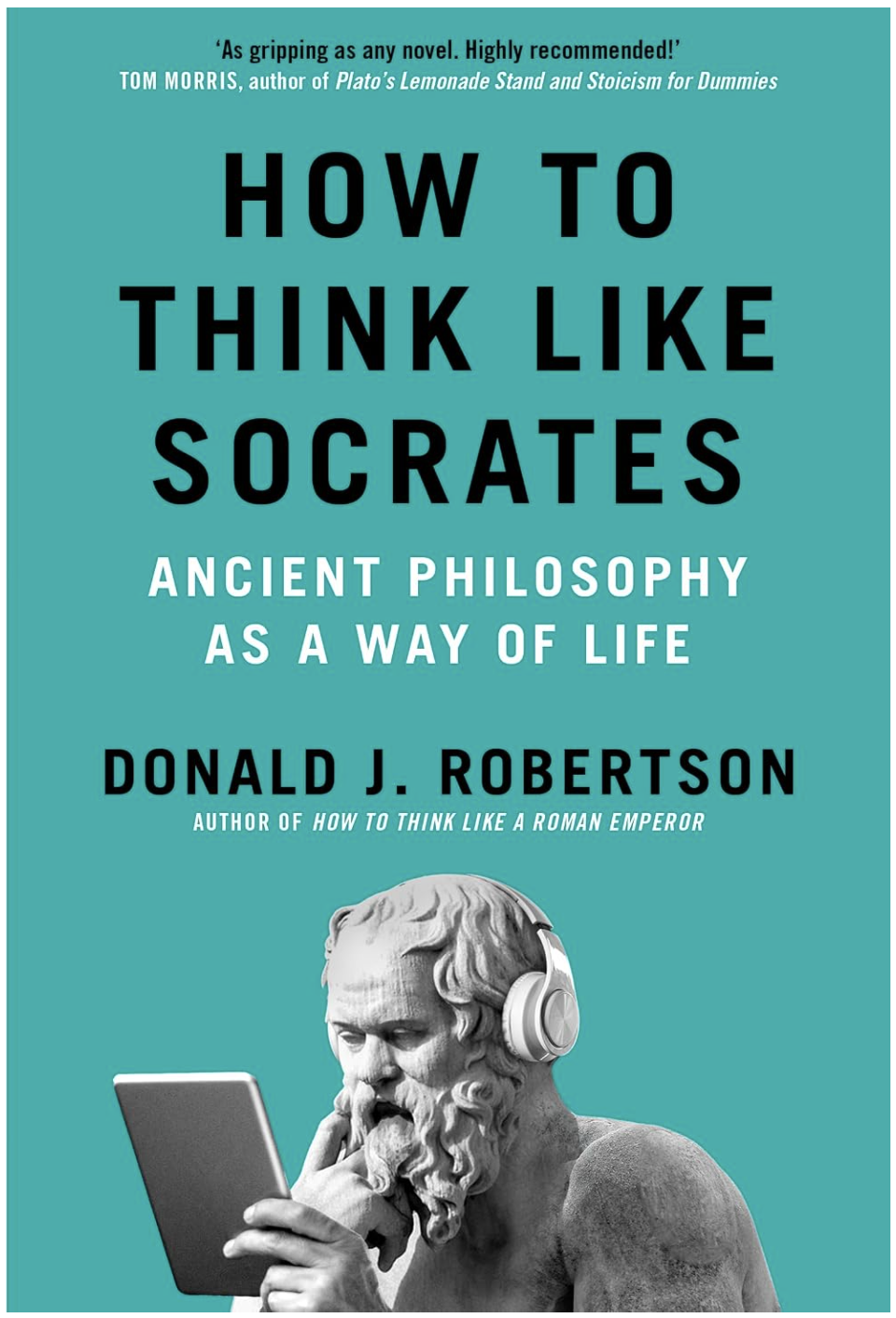
After How to think like a Roman Emperor I basically became a Robertson fan.
I know that I know nothing (Sokrates)
This is one of the quotes my mathematics teacher used to repeat at school. At that time I didn’t know anything about Socrates. A few years later, I finally understood where the Socratic method of asking questions comes from. He was known for “asking a lot of questions” during his conversations, taking someone’s confident definition (of something) and testing it against cases until contradictions arose. The point was not to beat his opponent’s arguments. The Sophists, however, were known for doing everything to win a dispute. They were basically the “influencers” of Athens at that time. The point was that discovering you don’t know something is indeed a virtue.
What is virtue? It comes from the Greek word arete. In our modern world people would translate it to “excellence” and refer to the qualities that make someone exceptionally good.
Socrates was sentenced to death for impiety (not recognizing the gods of the city and introducing new ones) and for corrupting the youth of Athens (mainly because he taught them how to think and question everything). Long before that, Socrates’ friend Chaerephon had asked the Oracle of Delphi whether anyone was wiser than Socrates. The answer was: “no one is wiser”. Socrates couldn’t believe it, so he treated the oracle’s answer as something to be tested and “interrogated” politicians, poets and craftsmen in order to find someone wiser. He came to the conclusion that the oracle was right: he was indeed the wisest person, but only in this narrow sense: he alone did not think he knew what he did not know.
The link to Stoicism is direct: Zeno of Citium came to philosophy after reading about Socrates.
📚 Meditations #
Marcus Aurelius — Goodreads
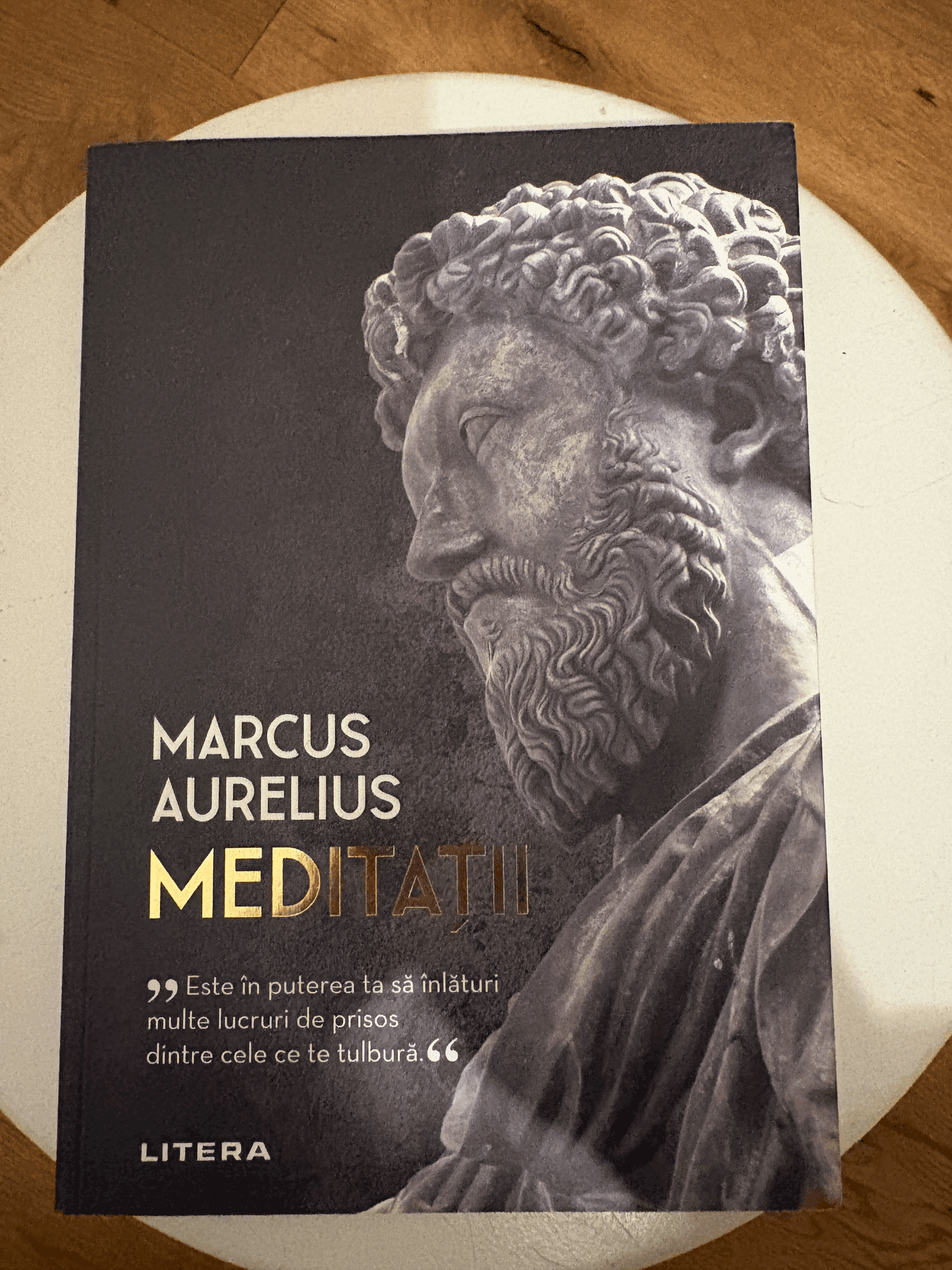
I’d been circling this one for years already. I read How to think like a Roman Emperor first, and back then I wrote that I still wanted to read the Meditations itself. It took until September 2026. And it was a huge disappointment. Let me explain.
Reading it after the secondary literature was the right thing for me. Robertson’s book gave me the biographical background and made me curious to read more about Marcus Aurelius in the first place. Read my notes about How to think like a Roman emperor Afterwards, I thought, it would make sense to go back to the source (Meditations) and read more about his thoughts. I’ve found the book to be quite chaotic and not very easy to understand. When I showed some friends that I bought the book, all they said was: “I stopped when Marcus started to thank his ancestors”. And that part was at the very beginning. Maybe I didn’t put in enough mental energy to deep-dive, but I gave up reading the book after 3/4 of it. I plan to maybe listen to some Blink (in the Blinkist app) to get like the core ideas. But overall, I would not recommend you start your Stoic journey by reading Meditations.
Politics #
📚 Blueprint for Revolution #
Srdja Popović — Goodreads
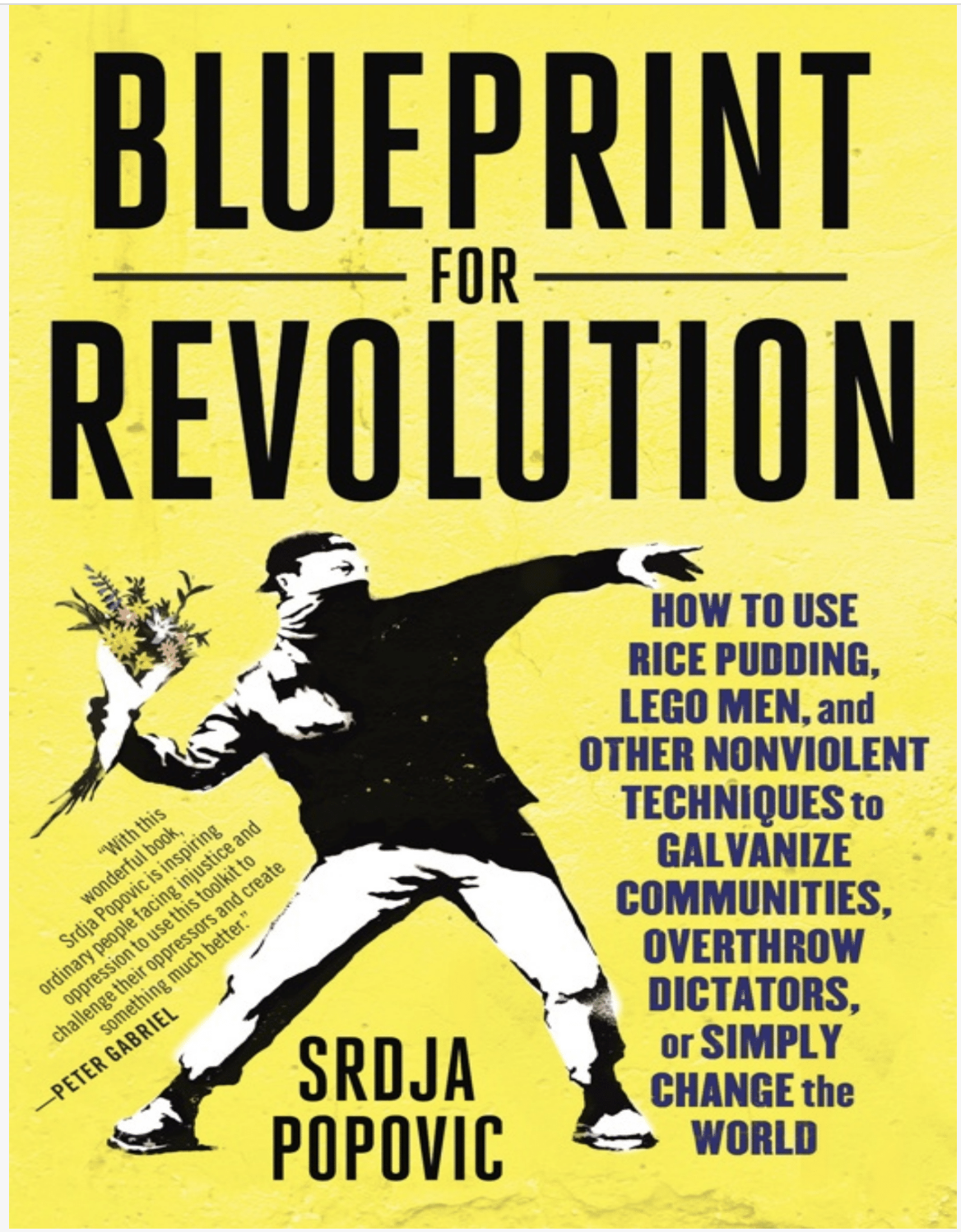
Full subtitle: “How to Use Rice Pudding, Lego Men, and Other Nonviolent Techniques to Galvanize Communities, Overthrow Dictators, and Save the World”. Which was appealing enough.
Popović was one of the founders of Otpor!, the Serbian student movement that played a central role in bringing down Milošević in 2000. He later went on to train activists elsewhere through CANVAS.
The central claim is that successful nonviolent movements are built, not spontaneous, and that they follow certain patterns:
-
Every revolution has to be prepared (years!) in advance before taking place. Winning small fights first was just as important as finding the right people.
Proper revolutions are not cataclysmic explosions; they are long, controlled burns.
-
You don’t fight the dictator! You have to shake his pillars. No regime is self-sufficient. You need ordinary people who are loyal enough to execute the orders. Popović’s strategy was to peel away those “pillars” (e.g. pressuring foreign companies to pull their money out of the country, scaring tourists away from visiting the country) rather than confronting the regime directly.
-
Make fun of the regime! Facing Milošević’s secret police, activists painted his face on a barrel, put it on a busy street with a bat, and let people take turns hitting it for a coin. When police showed up, they had two options: arrest ordinary shoppers and look like thugs, or arrest a barrel and look ridiculous. They arrested the barrel. It made front pages.
-
Unite the opposition. At that time Serbia’s opposition parties had fought and fractured for years, which is exactly why Milošević could stay in power for so long. Otpor’s contribution before the 2000 election was to force the opposition leaders to unite behind a single candidate, under one coalition. This way all parties (despite their political programs and ideologies) had the same goal: Bring Milošević down! If the opposition hadn’t agreed on this, all the preparation and activism would have been wasted (because the vote would have split and the regime would have won by default).
Parties are the guardians of democracy.
(Quote from How Democracies Die, Levitsky & Ziblatt. Parties act as gatekeepers before an authoritarian takes power, screening out extremist candidates. Otpor showed the other half of that logic. After an authoritarian is already in power, opposition parties have to unite behind one candidate to remove him.)
Where has CANVAS been active? Popović’s CANVAS has trained activists in more than 50 countries since 2004, including Iran, Zimbabwe, Burma, Venezuela, Ukraine, Georgia, Belarus, Azerbaijan, Tunisia and Egypt.
Hungary is a recent case. CANVAS published an analysis of Tisza’s landslide win over Orbán in the April 2026 parliamentary election, tracing Péter Magyar’s path from inside Fidesz to leading the movement that ended Orbán’s 16-year rule (Tisza won 141 of 199 seats on 53.6% of the vote, a two-thirds supermajority). Check out canvasopedia.org for further details.
📚 Earth4All #
Sandrine Dixson-Declève, Owen Gaffney, Jayati Ghosh, Jørgen Randers, Johan Rockström & Per Espen Stoknes — Goodreads • Notes
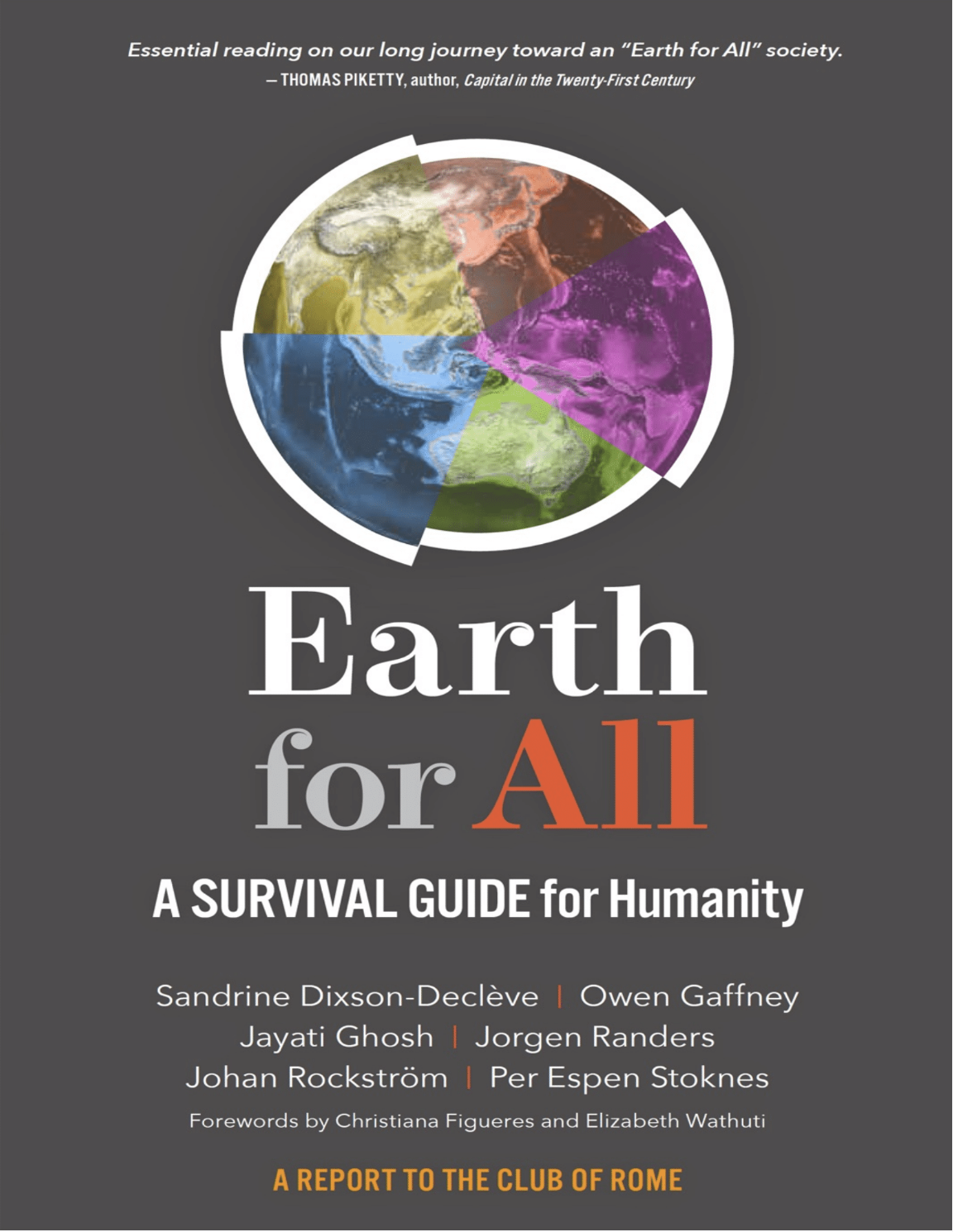
The Earth4All model is the successor of World3, the model behind The Limits to Growth (1972). Jørgen Randers worked on both. What the new model adds:
- Ten regions instead of one global average, so growth in one part of the world no longer hides stagnation in another
- Inequality is modelled explicitly, which World3 didn’t do
- Two new indicators, the Average Wellbeing Index and the Social Tension Index. When wellbeing declines, tension rises, trust erodes and governments lose the ability to act
- Calibrated against real data from 1980 to 2020, then run forward to 2100
This book outlines 2 scenarios which, in the context of today’s global crises (climate breakdown, rising inequality, eroding trust in institutions), might have a big impact on humanity:
-
“Too Little Too Late”
Scenario 1: Too Little Too Late. This scenario shows the potential consequences of continuing world development along the same dynamics as 1980 to 2020. The overall global result is a somewhat slowing population growth and world economic growth to 2050 and beyond, but also declining labor participation rates, declining trust in government, a steady increase in the ecological footprint, and rising loss in biodiversity.
This is definitely not a do-nothing scenario. This scenario implies that the world leaders don’t take enough action to combat all the challenges humanity is facing. There are some actions but these are slow:
- some climate action
- some social spending
- people trust in market self-regulation
The result: temperatures overshoot well past 1.5°C (heading toward 2.5°C by 2100), inequality keeps widening, and social tensions keep rising. All this triggers more frequent economic and ecological shocks that make coordinated action even harder going forward.
-
“Giant Leap”
As our second scenario, we chose Giant Leap, which illustrates the effects of the powerful and immediate implementation of the five extraordinary policy turnarounds. Its passage through the century is driven not by tinkering at the fringes but by fundamentally reconfiguring economies, energy systems, and food systems. It’s a major upgrade. A reset. An essential reboot of civilization’s guiding rules before the system crashes. Due to inertia in economies and in the climate, the main impacts of any action taken today are often not seen for years in economies and decades or centuries in the climate. We believe that nothing less than a “giant leap” now is needed if humanity is serious about turning around from the current trajectory and getting on a new track to a sustainable world by 2050.
Five simultaneous policy turnarounds, each quantified rather than aspirational:
Turnaround Target Poverty ≥5%/yr growth for low-income countries until >$15,000 per person, plus reform of the international financial system Inequality the richest 10% take less than 40% of national income Empowerment of women gender equity plus education and health investment, stabilising global population below 9 billion by 2050 Food a regenerative, nature-positive food system; no net cropland expansion Energy halve emissions roughly every decade to net-zero by 2050
The part I keep thinking about is the Citizens Fund / Universal Basic Dividend (UBD) proposal:
| Element | What the book proposes |
|---|---|
| Fee | companies pay for extracting or using shared commons (fossil fuels, land, freshwater, the ocean, minerals, the atmosphere, even data and knowledge) |
| Fund | the fees go into a national Citizens Fund |
| Dividend | the revenue is paid out equally to every citizen. It is deliberately not limited to the poorest, because the authors argue the middle class only supports a policy it benefits from |
| Purpose | economic security during the transformation, which the authors call an “innovation net” rather than just a safety net |
| Precedent | the Alaska Permanent Fund has paid every resident a share of the oil revenues since 1976, typically $1,000 to $2,000 per year |
Is this the same as Universal Basic Income? Not quite. UBI describes the payout (a regular income regardless of working status) and leaves open who pays for it. The UBD is defined by its source: it is a share of what the commons earn, not a transfer financed by taxes. The book treats the two as close relatives and speaks of “providing universal basic income through a Citizens Fund”.
My Earth4All book notes go deeper into all five turnarounds, and into the topics I’ve only touched here: the Earth4All model, the Giant Leaps, the wellbeing economy, planetary boundaries and social tipping points.
Psychology #
📚 Reclaiming Conversation #
Sherry Turkle — Goodreads • Notes
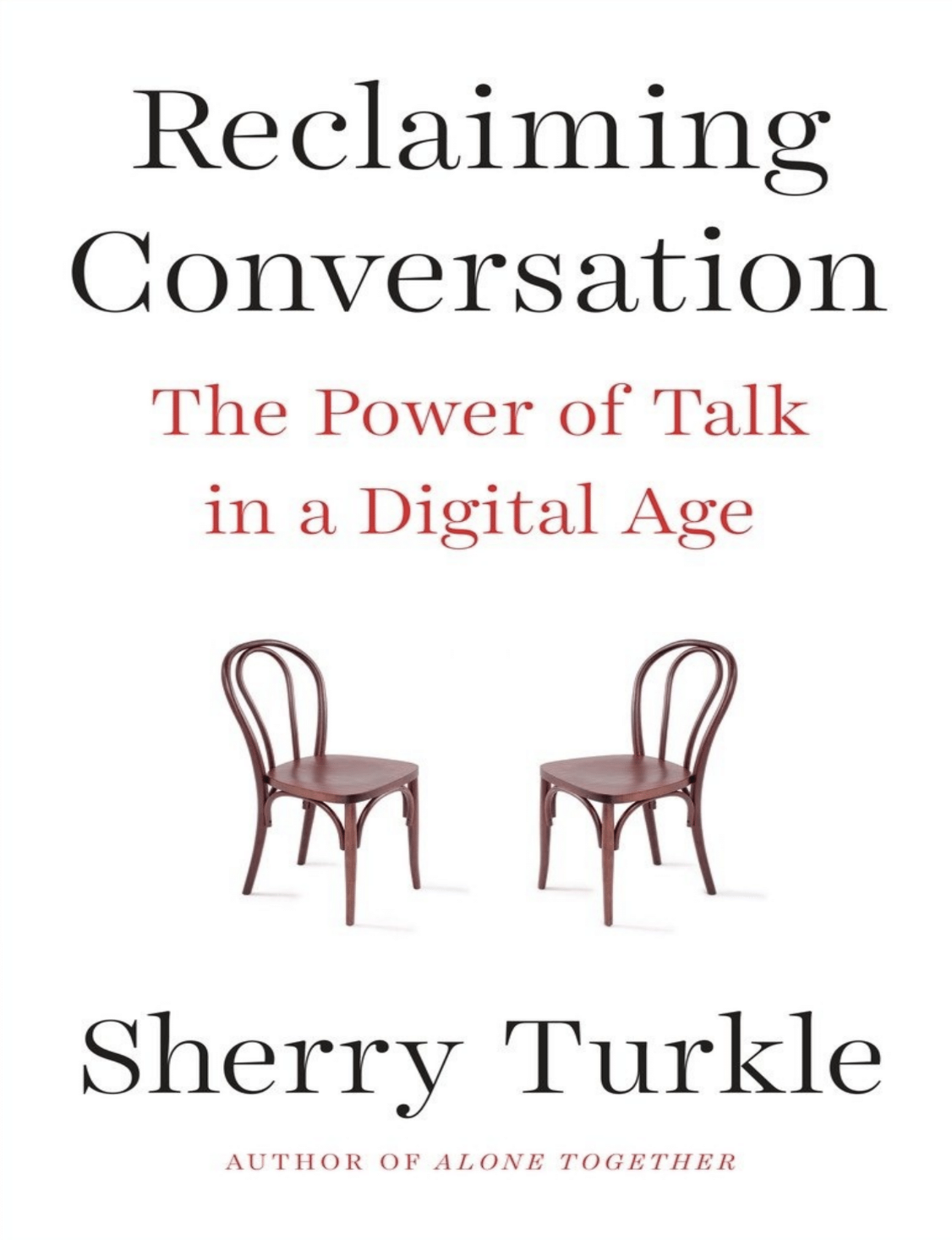
This is a book that is a combination of Digital Minimalism and The Anxious Generation. I’ve found Haidt very empirical whereas Turkle was somehow ethnographic: years of interviews in families, schools and workplaces.
The book is organised around Thoreau’s three chairs. Thoreau kept exactly three chairs in his Walden cabin:
- one for solitude
- one for friendship
- one for society
Turkle uses this as a map of what smartphones destroy: first our inner life, then our closest relationships, then our public life. She adds a fourth chair of her own: what happens when we talk to machines.
-
Even a silent phone degrades the conversation.
Face-down, switched off, doesn’t matter. The fact it’s just there lowers connection (in that moment) and empathy with the conversation partners. By anticipating interruption (why did we put the phone there at all?) we prefer light topics instead of deep, focused conversations.
-
Solitude is a skill, not a state.
The definition I already knew comes from Digital Minimalism, where Cal Newport borrows it from Lead Yourself First (Kethledge & Erwin):
solitude is a subjective state in which your mind is free from input from other minds. It’s about what happens in your brain, not about the environment around you. You can be in solitude in a crowded café and miss it completely alone in your room, scrolling.
Turkle separates two things we often mix up (the distinction comes from Paul Tillich):
- Loneliness is the pain of being alone
- Solitude is the “glory” of being alone
We learn solitude as children through good relationships with other people. If we never learn it, being alone always feels like loneliness (so we reach for the phone). And that’s exactly the mantra of the book: constant connection makes us lonelier.
-
Boredom is good.
We’re bored because we’re used to a constant influx of information. We need space and time for our mind to wander and come up with new ideas. Johann Hari describes this in Stolen Focus: when we seem to be doing nothing, the brain’s default mode network becomes active. A wandering mind makes new connections between things it already knows. And that’s where new ideas come from.
-
“I share, therefore I am.”
And, more than a symptom, constant connection is changing the way people think of themselves. It is shaping a new way of being. I call it “I share, therefore I am.” We share our thoughts and feelings in order to feel whole.
I think this is nothing new and we all know it: Folks who have to share every single moment of their life as if the whole world watches them.
But Turkle means something deeper than showing off:
- Before: you have a feeling, you deal with it on your own, and then (maybe) you tell someone about it
- Now: you have to share the feeling in order to feel it at all
Turkle puts it like this:
“I want to have a feeling; I need to send a text.”
People who grew up with social media told her they can’t feel like themselves unless they are posting or messaging. Sharing is no longer what you do after an experience. It has become part of the experience: without the post, it doesn’t feel real.
-
We are vulnerable, not addicted.
Turkle doesn’t like calling our phone use an “addiction”. The word matters, because it decides what the solution looks like:
| Word | What it means for the solution |
|---|---|
| Addicted | the only way out is to quit completely. But nobody can realistically live without a phone. |
| Vulnerable | the phone is built to exploit our weak spots (boredom, loneliness, the fear of missing out). Once we know where these are, we can protect them and keep the phone |
If you are addicted, you have to get off your drug. If you are vulnerable, you can work to be less vulnerable.
I find this much more useful in practice.
The virtuous circle she describes is the thesis in one line:
|
|
Break it at any point and the whole thing degrades.
Technology #
📚 Software Engineering at Google #
Titus Winters, Tom Manshreck & Hyrum Wright — Goodreads • Notes
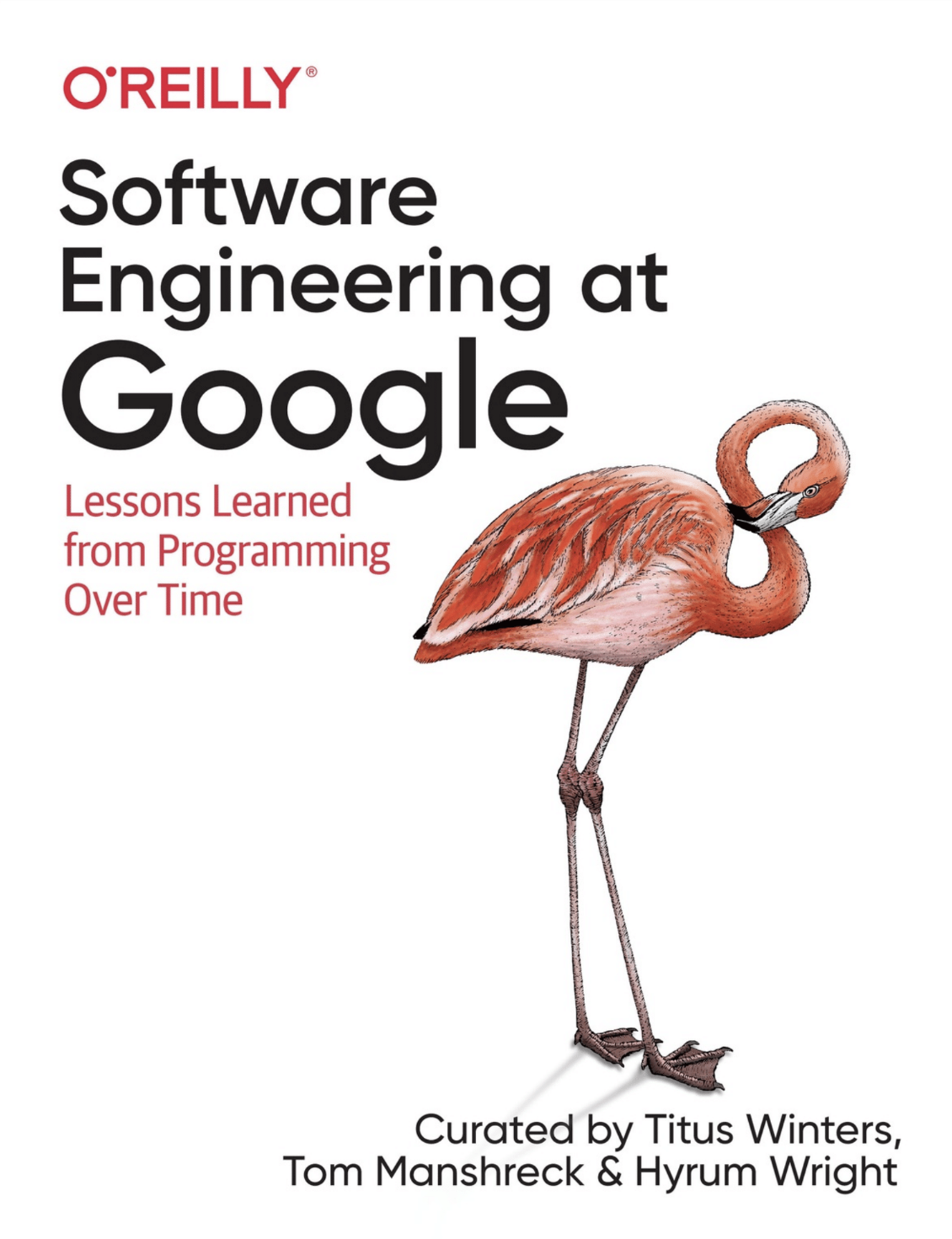
What is Software Engineering about nowadays? It used to be a discipline which took years (decades!) to master, where more and more sophisticated software was “engineered” to deal with complex topics. But what about today? Every dev is now a senior, every dev is now a (software) architect.
From the book (definition of “coding”):
Programming is certainly a significant part of software engineering: after all, programming is how you generate new software in the first place. If you accept this distinction, it also becomes clear that we might need to delineate between programming tasks (development) and software engineering tasks (development, modification, maintenance). The addition of time adds an important new dimension to programming. Cubes aren’t squares, distance isn’t velocity. Software engineering isn’t programming.
Definition of “software engineering”:
We propose that “software engineering” encompasses not just the act of writing code, but all of the tools and processes an organization uses to build and maintain that code over time.
So, software engineering is way more than just … writing code. Writing the actual code is just one step. Thinking about the problem, modeling it, thinking about different solutions/aspects, coming up with a PoC, implementing, testing, deploying it, maintaining it, incorporating customer feedback. All this is what software engineering is about.
From a technical point of view, Google has standardized quite a lot for its teams:
| Area | What every team at Google uses |
|---|---|
| Version control | one monorepo and trunk-based development: no long-lived branches, all commits go to head |
| Dependencies | the One-Version Rule: nobody gets to choose “which version of this component should I depend on?” |
| Build system | one artifact-based build system (Blaze, open-sourced as Bazel), external dependencies pinned in source control |
| Style | one style guide per language, enforced by formatters and linters wherever possible |
| Code review | every change needs three approvals: correctness (any engineer), readability (language-certified) and owner (OWNERS file) |
| Testing and CI | a test pyramid of roughly 80% unit, 15% integration and 5% end-to-end tests, one CI system (TAP) validating every commit |
| Static analysis | runs inside the code review tool (Critique), not only in CI |
| Code Search | one fast search over all the code |
| Large-scale changes | automated tooling for changes touching thousands of files, such as an API rename across the whole codebase |
| Compute | Borg, the ancestor of Kubernetes: declare the desired state and the scheduler places the job |
Apart from the technical aspects, I’ve enjoyed the cultural ones even more. What is leadership about? How to deal with superstars and geniuses? How to lead a team?
-
The Genius Myth.
We romanticize lone geniuses (Linus, Guido, Gates), but success is always a team effort. Working alone in your “cave” only delays the moment somebody spots your design mistakes. It also keeps the bus factor low: the number of people who need to be hit by a bus before the project is doomed.
-
Psychological safety comes first.
It’s the most critical factor for an effective team, backed by Google’s own research. If people are afraid of making mistakes, they stop asking questions and stop being transparent. The result: information islands, single points of failure and haunted graveyards (code nobody dares to touch).
-
Jerks are not good leaders.
This is the answer to the superstar question. Expertise and kindness are not mutually exclusive, and a “brilliant jerk” is harmful to knowledge sharing no matter how good the code is.
Leaders improve the quality of the people around them, improve the team’s psychological safety, create a culture of teamwork and collaboration, defuse tensions within the team, set an example of Google’s culture and values, and make Google a more vibrant and exciting place to work. Jerks are not good leaders.
-
Resist the urge to manage.
Leadership here means servant leadership: remove obstacles, build consensus, shield the team from the chaos above. See also engineering management.
Traditional managers worry about how to get things done, whereas great managers worry about what things get done (and trust their team to figure out how to do it).
-
Always be leaving.
The goal is a team that solves the problem by itself, without you. If you can’t take a week off without checking email, you’ve made yourself a single point of failure.
I would definitely recommend reading this book, not necessarily for the practical technical advice it includes. I think the cultural aspects are something every big corp should incorporate.
📚 Team Topologies #
Matthew Skelton & Manuel Pais — Goodreads
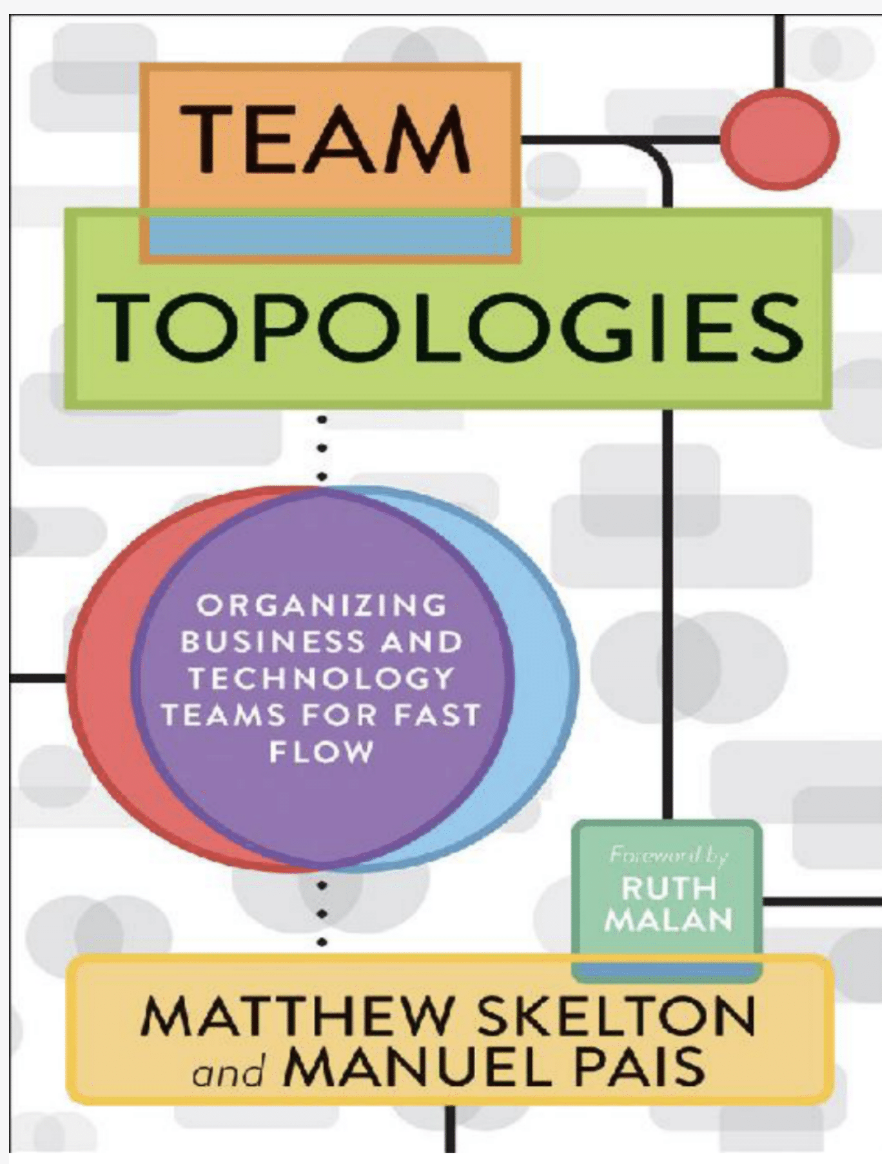
After reading Accelerate I definitely wanted to read more about this topic. However, it took more than 4 years to finally read this book.
The starting point is Conway’s Law: organisations produce designs that mirror their own communication structures. Skelton and Pais come up with the “inverse Conway manoeuvre”, where you deliberately shape teams to produce the architecture you want.
From there: four team types (stream-aligned, enabling, complicated-subsystem, platform) and three interaction modes (collaboration, X-as-a-Service, facilitating). Most teams should be stream-aligned; everything else exists to reduce the cognitive load on those teams.
Team types:
-
Stream-aligned
A stream-aligned team is a team aligned to a single, valuable stream of work; this might be a single product or service, a single set of features, a single user journey, or a single user persona.
-
Enabling
The end goal of an enabling team is to increase the autonomy of stream-aligned teams by growing their capabilities with a focus on their problems first, not the solutions per se.
-
Complicated-subsystem
A complicated-subsystem team is responsible for building and maintaining a part of the system that depends heavily on specialist knowledge, to the extent that most team members must be specialists in that area of knowledge in order to understand and make changes to the subsystem.
-
Platform
The purpose of a platform team is to enable stream-aligned teams to deliver work with substantial autonomy. The stream-aligned team maintains full ownership of building, running, and fixing their application in production.
Interaction modes:
- Collaboration: working closely together with another team
- X-as-a-Service: consuming or providing something with minimal collaboration (to another team)
- Facilitating: helping (or being helped by) another team to clear impediments
Besides Conway’s Law I’ve found the concept of cognitive load something that most organizations don’t think about. Whenever you put individuals into teams, you should draw clear team boundaries as well: What is within the team’s responsibility and what is not. That should not be decided from above or according to some org chart. When a team owns more than it can hold in its collective head, symptoms such as slow delivery, poor software quality and long processes should not be ignored. Reorganising the people won’t fix it if you don’t reduce the cognitive load that team has to handle.
It reads well alongside Software Engineering at Google. Google’s answer to cognitive load is enormous investment in tooling and platform teams, which is essentially the Team Topologies platform pattern with a very large budget behind it.
Biographies #
📚 26 Marathons #
Meb Keflezighi & Scott Douglas — Goodreads
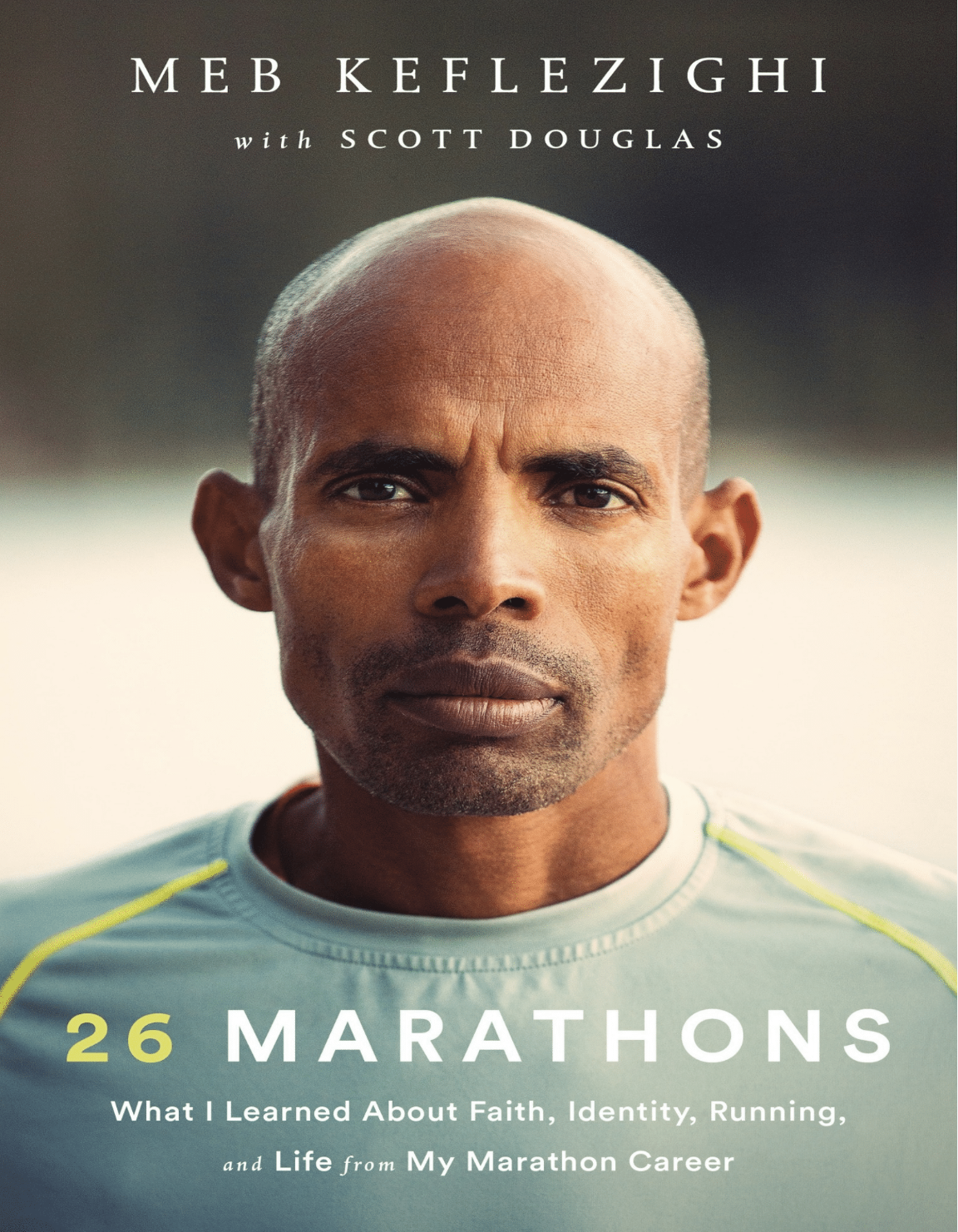
I have never ran a marathon in my life. I barely managed to run 10km but that’s it. Some colleague from Cashlink (Thanks Anca!) recommended me this book which I’ve found very inspiring.
Fiction #
📚 88 Names #
Matt Ruff — Goodreads

My one piece of fiction this year, which I got as a gift. I was told:
Well, you should know about Matt Ruff. He’s a famous SciFi author.
So, what is the story about? John Chu is a “sherpa”, a paid guide who walks rich clients through online role-playing games, supplying top-tier characters and gear for their adventures. Then he takes on a mysterious client claiming to be a North Korean prince, and the job drags him into real-world political intrigue.
It’s part cyberthriller, part fairly twisted romantic comedy. My main takeaway: Identity is fluid online and nothing can be taken at face value. As the story ends, I definitely didn’t expect THOSE real people behind the characters.
Not a profound book but somehow an entertaining one.
Le Fin #
As I’m writing this last chapter I realize I’ve spent more than 3 hours putting down thoughts Yes, of course, I use LLMs to search through my notes and sources just to make sure I got it right. about the books I’ve read. The year is not yet over and till December I will definitely read 1-3 more books. Writing this post has been some sort of “technical debt” which I’ve postponed way too long. Now, I’m kind of proud of myself that I have finally done it.
You can check out all the books I’ve rated on my Goodreads profile. I also maintain a to-read list with books that I plan to read in the future.